Monitor
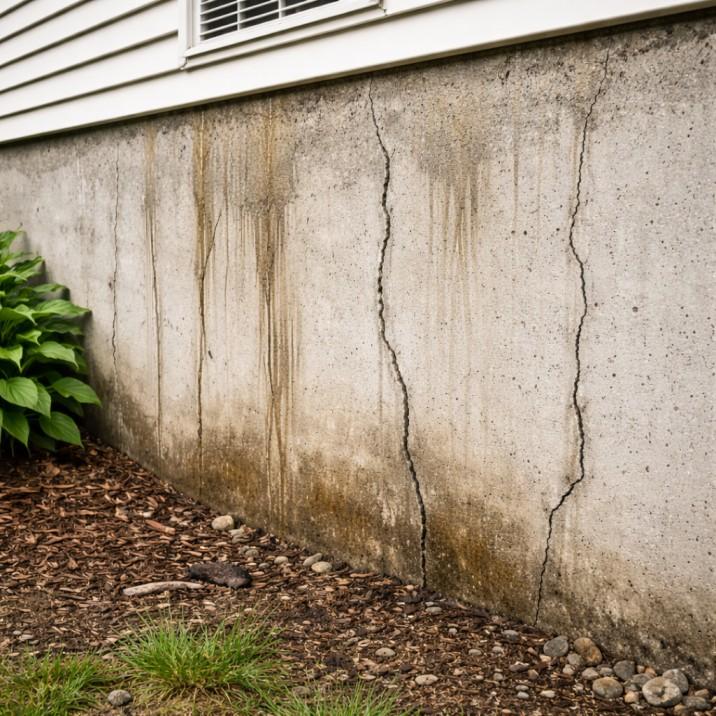
Hairline Vertical Cracks
Thin vertical cracks in poured concrete are usually shrinkage from when the concrete cured. They're common and often stable, but they can still let water in.
Typical fix: seal or inject if it leaks, then monitor.

Cracked walls, leaking basements, bowing block, and crumbling stone foundations. We find out why it's happening and fix the cause, not just the crack you can see.


Your foundation holds up the entire house and keeps the ground out of your basement. When it starts to crack, leak, or move, the problem rarely stays small. Water finds its way in, freeze-thaw cycles widen every gap, and soil pressure keeps pushing against walls that have already been weakened.
Kings Masonry & Construction repairs foundations and basements for homes, multi-families, and commercial buildings across Massachusetts, from Greater Boston to the South Shore and the South Coast. We work on every type of foundation found in New England, including the ones many contractors avoid.
Most foundation problems come down to three things: water, soil pressure, and aging masonry. A crack is usually the symptom. Before we recommend anything, we look at grading, downspouts, drainage, wall type, and how the crack has behaved over time, so the repair addresses what's actually causing it.
Some jobs are a single crack injection finished in a day. Others need repointing, reinforcement, drainage, and waterproofing together. Either way, you get a clear explanation, photos of what we found, and a written estimate before anything is scheduled.
Not every crack is a structural emergency, and not every crack is harmless. The direction, width, and location of a crack tell us a lot about what's behind it. Here's how we read them.
Thin vertical cracks in poured concrete are usually shrinkage from when the concrete cured. They're common and often stable, but they can still let water in.
Once a vertical crack is wider than about an eighth of an inch, or one side is offset from the other, there's movement or settlement worth addressing.
Cracks running at an angle, often from the corners of windows or the top of a wall, usually point to uneven settlement under one part of the foundation.
In brick and block walls, cracks that follow the mortar joints in a stair pattern show the wall is shifting. They tend to grow with each freeze-thaw season.
A horizontal crack, especially with the wall bowing inward, means soil and water pressure are pushing the wall. This is the most serious crack pattern we see.
Damp edges, rust stains, or white efflorescence along a crack mean water is moving through it. Even a small crack becomes a leak path in spring.
From a single leaking crack to a full basement waterproofing system, these are the foundation repairs we handle most. Open any service to see what it involves.
Cracks in poured concrete walls are sealed from the inside with low-pressure injection that fills the crack through the full thickness of the wall. Wider or active cracks get a structural repair, and we look at why the crack formed so it doesn't simply open somewhere else.
Fieldstone, granite, and brick foundations lose mortar over decades, leaving voids that let in water, cold air, and pests. We clean out loose material, fill deep voids, and repoint with a mortar compatible with old masonry, which is usually softer and more breathable than modern cement.
Walls that bow, lean, or show horizontal cracks are being pushed by soil and water pressure. Depending on the wall type and how far it has moved, stabilization can include steel reinforcement, partial rebuilding, and relieving the pressure that caused the movement.
When digging outside isn't practical, water can be managed from the inside. An interior perimeter drain collects water at the base of the wall and carries it to a sump pump before it reaches the floor.
Exterior waterproofing stops water before it reaches the wall. We excavate along the foundation, repair and seal the outside face, apply a waterproof membrane, and add drainage and grading so water moves away from the house.
Many basement leaks come through specific weak points rather than the wall itself: tie-rod holes in poured walls, the cove joint where wall meets floor, pipe penetrations, and old window or coal chute openings. We seal each source individually.
Parging is the cement coating on the exposed part of a foundation. When it cracks and falls off, water gets behind it and into the masonry. We remove loose parging, repair the wall underneath, and apply a new coat that bonds properly.
Once the moisture source is fixed, we clean up mold near the floor line, clean basement walls, and apply masonry-appropriate coatings. Exposed exterior masonry can be treated with a breathable, clear water repellent.
Old housing stock, dense clay and filled soils, high groundwater, and long freeze-thaw winters make Greater Boston hard on foundations. These are the problems we're called for most.
Many Boston-area homes built before 1920 sit on fieldstone or granite rubble foundations. A century of groundwater washes the mortar out, leaving gaps where water, cold air, and rodents get in.
We clean out failed mortar, fill voids, and repoint with a compatible mix, then correct grading and drainage outside so the wall stays drier.
Basements that stay dry most of the year take on water in March and April, when snowmelt and heavy rain saturate the soil and push groundwater against the walls.
We find the entry points, seal cracks and joints, and add interior or exterior drainage so seasonal water has somewhere to go besides your floor.
Poured foundations from the mid-1900s on often leak through the small tie-rod holes left by the concrete forms, or along the joint where the wall meets the floor slab.
Each tie-rod hole and leaking joint is sealed individually. For cove joint leaks, interior drainage relieves the water pressure that's pushing it through.
Concrete block walls, common in additions and garages, can bow inward when saturated clay soil freezes and expands against them year after year.
We stabilize the wall with reinforcement, rebuild sections that have moved too far, and reduce the soil pressure with drainage.
On tight city lots, downspouts often empty right at the foundation and the ground slopes toward the house. Every storm puts gallons of water directly against the wall.
We extend and redirect downspouts, regrade where possible, and install drains so roof water is carried away from the foundation.
Decades of quick fixes, like cement smeared over cracks or coatings painted over damp walls, trap moisture and hide the real damage until pieces start falling off.
We remove failed patches and parging, repair the masonry underneath, and refinish it with materials that let the wall breathe.
Foundation problems show up both inside the basement and around the outside of the house. If you notice any of these, it's worth having the foundation looked at before the next wet season.
One sign alone doesn't always mean a serious problem. Several together, or any that are getting worse, mean it's time for an inspection.
We handle brick repairs, chimney rebuilds, repointing, walkways, stairs, and other
masonry services with expert care and reliable results.
There's no single right answer for a wet basement. The right approach depends on where the water comes from, the type of foundation, and what's around the house. Here's how the two main methods compare.
| Interior Waterproofing | Exterior Waterproofing | |
|---|---|---|
| How it works | Collects water that enters at the base of the wall and pumps it out | Stops water at the outside face of the wall before it gets in |
| Best for | Cove joint leaks, high groundwater, homes with tight lot lines | Leaks through the wall itself, failing exterior coatings, new foundations |
| What's involved | Perimeter trench inside, drain pipe, sump pump, wall membrane | Excavation, wall repair, waterproof membrane, footing drain, backfill |
| Disruption | Work happens inside; basement needs to be cleared along the walls | Digging around the house; landscaping and walkways are affected |
| Protects the wall | Relieves water pressure but the wall still gets wet outside | Keeps the masonry itself drier and protected from freeze-thaw |
| Often paired with | Crack injection, dehumidification, sump backup | Grading, downspout extensions, French drains |
Many Massachusetts homes get the best result from a combination: sealing the specific leak points, correcting grading and downspouts outside, and adding interior drainage where groundwater is high. We'll recommend the simplest approach that will actually keep your basement dry.
Foundation work involves your home's structure, so every job follows the same careful process. You always know what we found, what we recommend, and what happens next.
(857) 249-5127We look at the walls, floor, cracks, and leak points inside, and at grading, downspouts, and drainage outside.
We explain what's causing the problem, with photos, and whether it needs a structural engineer's input.
A clear scope, the repair method, materials, and price in writing before anything is scheduled.
We clear and protect the work area, mark utilities before any digging, and plan around the weather.
Crack repair, repointing, stabilization, or drainage, done with materials suited to your foundation type.
We show you the finished work, explain what to watch for, and leave the site clean.
Foundation repair is always priced after an inspection, because two cracks that look alike can need very different fixes. These are the factors that move the price most.
Fieldstone, brick, poured concrete, and block each need different materials and methods.
One leaking crack is a short job. Several cracks plus leak points add time and material.
Bowing or shifting walls need reinforcement, which costs more than sealing a stable crack.
Excavation outside costs more than interior work, but protects the wall itself.
Finished basements, decks, walkways, and landscaping can add prep and restoration.
Grading, downspout work, and drains often make the repair last, and are part of the price.
Every estimate is written and itemized, so you can see exactly what you're paying for.
We repair foundations and basements throughout Greater Boston, the South Shore, Plymouth County, and the South Coast.
Don't see your town listed? We likely still cover your area. Contact us for a free estimate.
Request a Free QuoteStraight answers to the questions Massachusetts homeowners ask us most.
No. Thin vertical cracks in poured concrete are often shrinkage and may only need sealing. Horizontal cracks, bowing walls, stair-step cracks, and cracks that keep getting wider point to movement and should be looked at soon.
Most crack repairs and leak sealing are finished in a day. Larger jobs such as waterproofing or wall stabilization usually take one to three days, and exterior excavation can take longer depending on access.
Not always. Many cracks and leaks can be repaired from inside. Excavation is recommended when the outside of the wall needs repair or a waterproof membrane, or when drainage at the footing has failed.
Yes. Fieldstone and granite foundations can last for generations when they're repointed with compatible mortar and kept dry. Replacing them is rarely necessary unless sections have collapsed or moved significantly.
Snowmelt and spring rain saturate the soil and raise groundwater, which pushes water through cracks, tie-rod holes, and the joint between the wall and floor. Fixing those entry points and improving drainage usually solves seasonal leaks.
It depends on where the water comes from and what's around the house. Interior drainage works well for groundwater and cove joint leaks. Exterior waterproofing protects the wall itself. We'll explain which fits your situation.
For most crack and leak repairs, no. For bowing walls, significant settlement, or work that affects the structure, an engineer's evaluation may be recommended or required, and we'll tell you up front.
Yes, much of it can. Interior crack injection, leak sealing, and interior waterproofing can be done year-round. Exterior excavation and mortar work depend on ground and air temperatures.
Most foundation problems get worse with every wet season and freeze-thaw cycle. A leak can lead to mold and damaged finishes, and a moving wall gets harder and more expensive to stabilize the longer it's left.
Yes. We inspect the foundation, explain what we found and what we recommend, and give you a clear written estimate before any work begins.

Skilled in brick, stone, and chimney work, we deliver durable, high-quality masonry services that keep Boston homes safe, strong, and looking their best.
Skilled in brick, stone, and chimney work, we deliver durable, high-quality masonry services that keep Boston homes safe, strong, and looking their best.