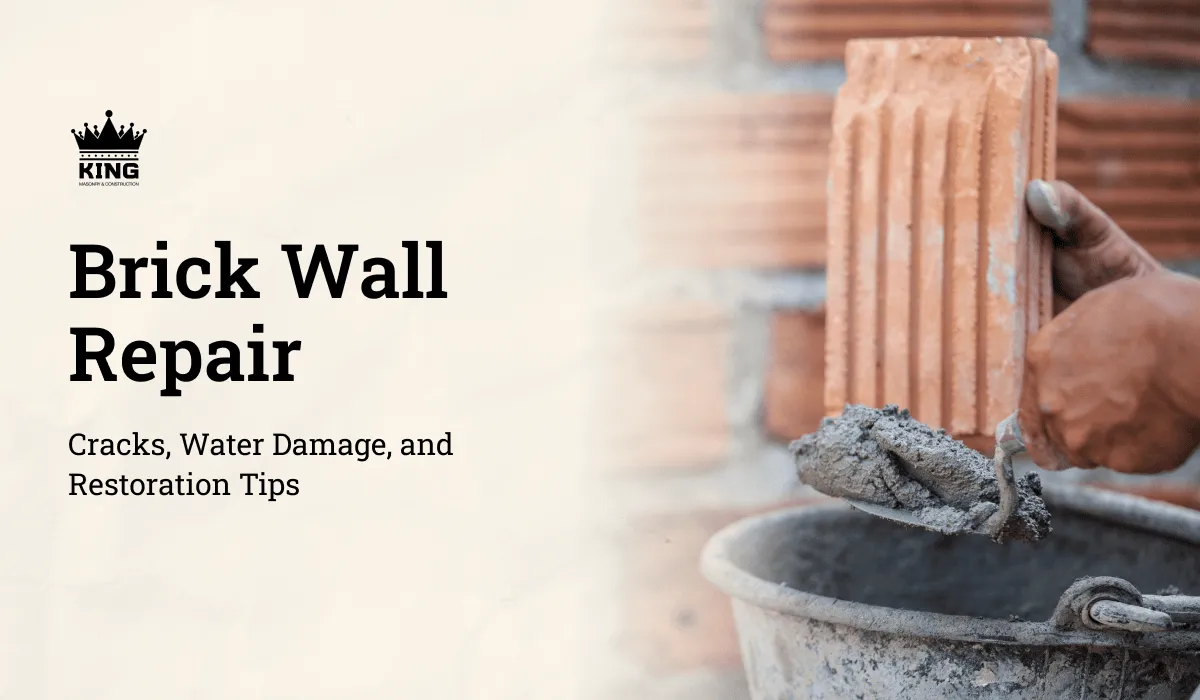
Brick Wall Repair: Cracks, Water Damage, and Restoration Tips
Brick walls are built to last, but they are not immune to time, weather, and structural movement. This guide focuses on practical, real-world tips. No fluff. Just clear signs to look for, what causes the damage, and how brick wall repair is typically handled to prevent bigger problems later.
Common Signs You Need Brick Wall Repair
Brick damage rarely appears overnight. It builds slowly, and early signs are easy to miss.
Watch for:
Cracks running through bricks or mortar joints
White powdery residue (efflorescence)
Loose or crumbling mortar
Damp spots or water stains on interior walls
Bricks flaking or breaking apart
Catching these early can make brick wall repair simpler and less disruptive.
Understanding Brick Wall Cracks
Not all cracks mean the same thing, but none should be ignored.
Hairline Cracks
These are thin and often appear in mortar joints. They’re usually caused by natural settling or temperature changes. While minor, they can allow moisture in over time and should be sealed as part of routine brick wall repair.
Stair-Step Cracks
These follow the mortar pattern and can indicate foundation movement. This type of damage often requires a more thorough brick wall repair approach, sometimes combined with structural assessment.
Vertical or Horizontal Cracks
Long cracks cutting through bricks may point to pressure buildup or moisture-related expansion. These cracks often worsen if water continues to penetrate the wall.
Brick Wall Repair for Water Damage
Water is one of the biggest threats to brick walls. Even small gaps can let moisture in, leading to long-term deterioration.
Common Water-Related Issues
Efflorescence caused by trapped moisture
Spalling bricks that flake due to freeze-thaw cycles
Mold or dampness inside the building
Effective brick wall repair always starts with identifying how water is entering the wall.
Repair Tips
Repoint damaged mortar joints to seal entry points
Replace severely damaged bricks
Improve drainage around the foundation
Apply breathable masonry sealers when appropriate
Ignoring water damage often leads to more extensive restoration later.
Mortar Matters More Than You Think
Many brick wall problems are actually mortar problems. Mortar is designed to be weaker than brick so it can absorb movement.
When mortar fails:
Bricks loosen
Cracks spread
Water enters more easily
Repointing is a common brick wall repair method that involves removing deteriorated mortar and replacing it with new, compatible mortar. Matching mortar type is critical, especially in older buildings.
Brick Wall Restoration: When Repair Isn’t Enough
Sometimes damage goes beyond spot fixes.
Signs Full Restoration Is Needed
Widespread cracking across multiple areas
Extensive spalling bricks
Long-term moisture penetration
Aging walls with outdated or incompatible repairs
Brick wall restoration focuses on returning the wall to stable condition, not just covering damage. This often includes brick replacement, structural reinforcement, and proper moisture management.
DIY vs. Professional Brick Wall Repair
Small repairs can sometimes be handled by homeowners, but there’s a clear line.
DIY May Work If:
Cracks are small and limited to mortar
No signs of moisture inside the building
Bricks are intact and stable
Professional Help Is Better If:
Cracks continue to grow
Water damage is visible
Bricks are loose or shifting
Improper brick wall repair can trap moisture or create mismatched materials that cause more damage over time.
Maintenance Tips to Avoid Future Repairs
Preventive care reduces the need for frequent brick wall repair.
Helpful habits include:
Inspect walls annually
Repair small mortar cracks early
Keep gutters and drainage clear
Avoid pressure washing brick surfaces
Address moisture issues promptly
Brick walls last longest when small issues are handled before they escalate.
Final Thoughts
Brick walls are durable, but they rely on proper care. Cracks, water damage, and mortar failure don’t fix themselves. Understanding the signs and knowing when brick wall repair is needed helps protect both the appearance and structure of your property.
Handled correctly, brick wall repair restores strength, keeps moisture out, and extends the life of the wall for decades. Ignored, those same issues only grow more expensive with time.
If you’re unsure about the condition of your brick walls, early evaluation is always the smarter move.
